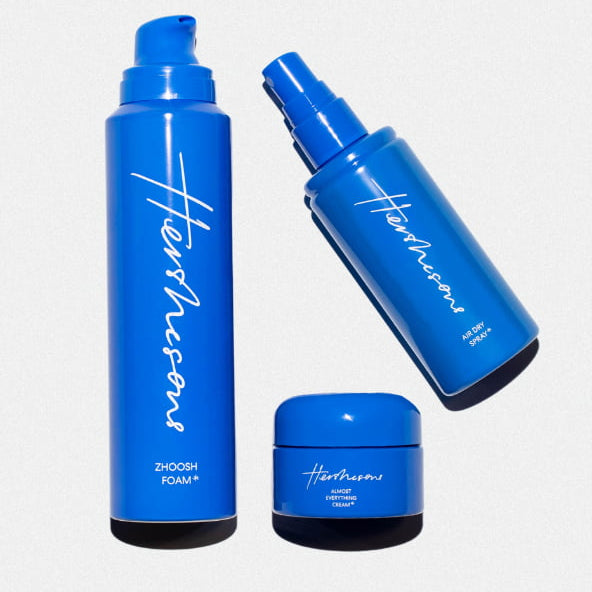
Once reserved for curls, coils and textured hair, co-washing – short for conditioner washing – is now enjoying more widespread popularity among people who don’t feel they need to shampoo so much.
Since we get so many questions about this technique in
salon, we thought we’d share our verdict here.
What is co-washing?
Co-washing replaces shampoo with a conditioning cleanser – something gentle enough to clean the hair and scalp without stripping natural oils. There are no harsh detergents, no aggressive foaming, no squeaky-clean finish. Instead, hair is left softer, calmer and more hydrated.
The idea is simple: if your hair isn’t overly oily or product-loaded, why treat it like it is?
When it works
Co-washing works best on hair that tends to run dry rather than greasy. Curly, coily, textured, bleached or colour-treated hair often benefits most, because these hair types lose moisture more easily and don’t always need a deep cleanse every wash.
Used correctly, co-washing can reduce frizz, improve curl definition, help hair feel stronger and more elastic and calm sensitive or dry scalps.
When it doesn’t
Co-washing isn’t a universal solution – and it’s not meant to be. Fine hair, oily scalps or anyone using heavy styling products may find that co-washing alone isn’t enough.
Without occasional shampoo, residue can build up, leaving hair limp or the scalp feeling congested.
How to do it properly
The mistake most people make is treating co-wash like conditioner. It still needs intention. Massage it into the scalp properly, spend time cleansing, then rinse thoroughly. Skipping the scalp is where co-washing falls down.
Many clients alternate: shampoo when needed, co-wash when hair feels dry, stressed or overworked. It’s less about rules, more about reading your hair.
The verdict
Yes – co-washing works. But only when it’s used for the right hair type, in the right way, at the right time.
Healthy hair isn’t about doing more. It’s about doing what makes sense. Sometimes that’s a deep cleanse. Sometimes it’s stepping back and letting your hair keep what it already has. And if your hair feels better afterwards? That’s usually your answer.